Expiring Drug Patents Cheat Sheet
We analyse the patents covering drugs in 134 countries and quickly give you the likely loss-of-exclusivity/generic entry date
United States: These 61 Drugs Face Patent Expirations and Generic Entry From 2026 - 2027
The content of this page is licensed under a Creative Commons Attribution 4.0 International License.

Generic Entry Dates in Other Countries
Friedman, Yali, "United States: These 61 Drugs Face Patent Expirations and Generic Entry From 2026 - 2027" DrugPatentWatch.com thinkBiotech, 2026 www.drugpatentwatch.com/p/expiring-drug-patents-generic-entry/.
Media collateral
These estimated drug patent expiration dates and generic entry opportunity dates are calculated from analysis of known patents covering drugs. Many factors can influence early or late generic entry. This information is provided as a rough estimate of generic entry potential and should not be used as an independent source. The methodology is described in this blog post.
When can SOVALDI (sofosbuvir) generic drug versions launch in the United States?
Generic name: sofosbuvir
DrugPatentWatch® Estimated Key Patent Expiration / Generic Entry Date: August 28, 2026
Generic Entry Controlled by: United States FDA Regulatory Exclusivity
SOVALDI is a drug marketed by Gilead Sciences Inc. There are nine patents protecting this drug and one Paragraph IV challenge.
This drug has three hundred and sixty-nine patent family members in fifty countries. There has been litigation on patents covering SOVALDI
See drug price trends for SOVALDI.
The generic ingredient in SOVALDI is sofosbuvir. There are nine drug master file entries for this API. One supplier is listed for this generic product. Additional details are available on the sofosbuvir profile page.
When can TECHNEGAS KIT (technetium tc-99m labeled carbon) generic drug versions launch in the United States?
Generic name: technetium tc-99m labeled carbon
DrugPatentWatch® Estimated Key Patent Expiration / Generic Entry Date: September 29, 2026
Generic Entry Controlled by: United States FDA Regulatory Exclusivity
TECHNEGAS KIT is a drug marketed by Cyclomedica. There is one patent protecting this drug.
This drug has fourteen patent family members in ten countries.
The generic ingredient in TECHNEGAS KIT is technetium tc-99m labeled carbon. There are four drug master file entries for this API. One supplier is listed for this generic product. Additional details are available on the technetium tc-99m labeled carbon profile page.
When can VEREGEN (sinecatechins) generic drug versions launch in the United States?
Generic name: sinecatechins
DrugPatentWatch® Estimated Key Patent Expiration / Generic Entry Date: October 02, 2026
Generic Entry Controlled by: United States Patent Patent 5,795,911

This drug has thirty-one patent family members in twenty countries. There has been litigation on patents covering VEREGEN
See drug price trends for VEREGEN.
The generic ingredient in VEREGEN is sinecatechins. There is one drug master file entry for this API. One supplier is listed for this generic product. Additional details are available on the sinecatechins profile page.
When can SCENESSE (afamelanotide) generic drug versions launch in the United States?
Generic name: afamelanotide
DrugPatentWatch® Estimated Key Patent Expiration / Generic Entry Date: October 08, 2026
Generic Entry Controlled by: United States FDA Regulatory Exclusivity
SCENESSE is a drug marketed by Clivunel Inc. There is one patent protecting this drug.
This drug has twenty-three patent family members in sixteen countries.
See drug price trends for SCENESSE.
The generic ingredient in SCENESSE is afamelanotide. There is one drug master file entry for this API. One supplier is listed for this generic product. Additional details are available on the afamelanotide profile page.
When can ADASUVE (loxapine) generic drug versions launch in the United States?
Generic name: loxapine
DrugPatentWatch® Estimated Key Patent Expiration / Generic Entry Date: October 23, 2026
Generic Entry Controlled by: United States Patent Patent 8,387,612
ADASUVE is a drug marketed by Nova Pneuma. There is one patent protecting this drug.
This drug has twenty-one patent family members in six countries. There has been litigation on patents covering ADASUVE
See drug price trends for ADASUVE.
The generic ingredient in ADASUVE is loxapine. There are eight drug master file entries for this API. One supplier is listed for this generic product. Additional details are available on the loxapine profile page.
When can SYNRIBO (omacetaxine mepesuccinate) generic drug versions launch in the United States?
Generic name: omacetaxine mepesuccinate
DrugPatentWatch® Estimated Key Patent Expiration / Generic Entry Date: October 26, 2026
Generic Entry Controlled by: United States Patent Patent 6,987,103
SYNRIBO is a drug marketed by Teva Pharms Intl. There is one patent protecting this drug and one Paragraph IV challenge.
This drug has twenty-one patent family members in twelve countries.
See drug price trends for SYNRIBO.
The generic ingredient in SYNRIBO is omacetaxine mepesuccinate. There are two drug master file entries for this API. Additional details are available on the omacetaxine mepesuccinate profile page.
When can XEGLYZE (abametapir) generic drug versions launch in the United States?
Generic name: abametapir
DrugPatentWatch® Estimated Key Patent Expiration / Generic Entry Date: October 28, 2026
Generic Entry Controlled by: United States Patent Patent 7,812,163
XEGLYZE is a drug marketed by Lnhc. There are two patents protecting this drug.
This drug has thirty-six patent family members in fifteen countries.
The generic ingredient in XEGLYZE is abametapir. Additional details are available on the abametapir profile page.
When can BEVYXXA (betrixaban) generic drug versions launch in the United States?
Generic name: betrixaban
DrugPatentWatch® Estimated Key Patent Expiration / Generic Entry Date: November 08, 2026
Generic Entry Controlled by: United States Patent Patent 7,598,276
BEVYXXA is a drug marketed by Portola Pharms Inc. There are five patents protecting this drug.
This drug has sixty-seven patent family members in twenty-six countries. There has been litigation on patents covering BEVYXXA
See drug price trends for BEVYXXA.
The generic ingredient in BEVYXXA is betrixaban. Additional details are available on the betrixaban profile page.
When can EXPAREL (bupivacaine) generic drug versions launch in the United States?
Generic name: bupivacaine
DrugPatentWatch® Estimated Key Patent Expiration / Generic Entry Date: November 09, 2026
Generic Entry Controlled by: United States FDA Regulatory Exclusivity
EXPAREL is a drug marketed by Pacira Pharms Inc. There are twenty-one patents protecting this drug.
This drug has thirty patent family members in twelve countries. There has been litigation on patents covering EXPAREL
See drug price trends for EXPAREL.
The generic ingredient in EXPAREL is bupivacaine. There are twelve drug master file entries for this API. Two suppliers are listed for this generic product. Additional details are available on the bupivacaine profile page.
When can HORIZANT (gabapentin enacarbil) generic drug versions launch in the United States?
Generic name: gabapentin enacarbil
DrugPatentWatch® Estimated Key Patent Expiration / Generic Entry Date: November 10, 2026
Generic Entry Controlled by: United States Patent Patent 8,026,279
HORIZANT is a drug marketed by Azurity. There are three patents protecting this drug. One tentatively approved generic is ready to enter the market.
This drug has seventy-three patent family members in twenty-four countries. There has been litigation on patents covering HORIZANT
See drug price trends for HORIZANT.
The generic ingredient in HORIZANT is gabapentin enacarbil. There are twenty-nine drug master file entries for this API. One supplier is listed for this generic product. Additional details are available on the gabapentin enacarbil profile page.
When can IZERVAY (avacincaptad pegol sodium) generic drug versions launch in the United States?
Generic name: avacincaptad pegol sodium
DrugPatentWatch® Estimated Key Patent Expiration / Generic Entry Date: November 11, 2026
Generic Entry Controlled by: United States Patent Patent 8,236,773
IZERVAY is a drug marketed by Astellas. There are six patents protecting this drug.
This drug has one hundred and sixteen patent family members in thirty countries.
See drug price trends for IZERVAY.
The generic ingredient in IZERVAY is avacincaptad pegol sodium. One supplier is listed for this generic product. Additional details are available on the avacincaptad pegol sodium profile page.
When can GIVLAARI (givosiran sodium) generic drug versions launch in the United States?
Generic name: givosiran sodium
DrugPatentWatch® Estimated Key Patent Expiration / Generic Entry Date: November 20, 2026
Generic Entry Controlled by: United States FDA Regulatory Exclusivity
GIVLAARI is a drug marketed by Alnylam Pharms Inc. There are eight patents protecting this drug.
This drug has one hundred and eighty-five patent family members in forty-three countries. There has been litigation on patents covering GIVLAARI
See drug price trends for GIVLAARI.
The generic ingredient in GIVLAARI is givosiran sodium. One supplier is listed for this generic product. Additional details are available on the givosiran sodium profile page.
When can AXUMIN (fluciclovine f-18) generic drug versions launch in the United States?
Generic name: fluciclovine f-18
DrugPatentWatch® Estimated Key Patent Expiration / Generic Entry Date: November 28, 2026
Generic Entry Controlled by: United States Patent Patent 10,010,632
AXUMIN is a drug marketed by Blue Earth. There are eight patents protecting this drug.
This drug has thirty patent family members in sixteen countries. There has been litigation on patents covering AXUMIN
The generic ingredient in AXUMIN is fluciclovine f-18. One supplier is listed for this generic product. Additional details are available on the fluciclovine f-18 profile page.
When can ZUNVEYL (benzgalantamine gluconate) generic drug versions launch in the United States?
Generic name: benzgalantamine gluconate
DrugPatentWatch® Estimated Key Patent Expiration / Generic Entry Date: December 01, 2026
Generic Entry Controlled by: United States Patent Patent 9,763,953
ZUNVEYL is a drug marketed by Alpha Cognition. There are four patents protecting this drug.
This drug has twenty-seven patent family members in eighteen countries. There has been litigation on patents covering ZUNVEYL
The generic ingredient in ZUNVEYL is benzgalantamine gluconate. One supplier is listed for this generic product. Additional details are available on the benzgalantamine gluconate profile page.
When can VYONDYS 53 (golodirsen) generic drug versions launch in the United States?
Generic name: golodirsen
DrugPatentWatch® Estimated Key Patent Expiration / Generic Entry Date: December 12, 2026
Generic Entry Controlled by: United States FDA Regulatory Exclusivity
VYONDYS 53 is a drug marketed by Sarepta Theraps Inc. There is one patent protecting this drug.
This drug has thirty patent family members in thirteen countries. There has been litigation on patents covering VYONDYS 53
The generic ingredient in VYONDYS 53 is golodirsen. One supplier is listed for this generic product. Additional details are available on the golodirsen profile page.
When can SIGNIFOR (pasireotide diaspartate) generic drug versions launch in the United States?
Generic name: pasireotide diaspartate
DrugPatentWatch® Estimated Key Patent Expiration / Generic Entry Date: December 14, 2026
Generic Entry Controlled by: United States Patent Patent 7,473,761
SIGNIFOR is a drug marketed by Recordati Rare. There are three patents protecting this drug.
This drug has forty-five patent family members in thirty-three countries.
See drug price trends for SIGNIFOR.
The generic ingredient in SIGNIFOR is pasireotide diaspartate. One supplier is listed for this generic product. Additional details are available on the pasireotide diaspartate profile page.
When can VYNDAMAX (tafamidis) generic drug versions launch in the United States?
Generic name: tafamidis
DrugPatentWatch® Estimated Key Patent Expiration / Generic Entry Date: December 19, 2026
Generic Entry Controlled by: United States Patent Patent 7,214,695
VYNDAMAX is a drug marketed by Foldrx Pharms. There are three patents protecting this drug.
This drug has sixty-six patent family members in twenty-seven countries. There has been litigation on patents covering VYNDAMAX
See drug price trends for VYNDAMAX.
The generic ingredient in VYNDAMAX is tafamidis. One supplier is listed for this generic product. Additional details are available on the tafamidis profile page.
When can VYNDAQEL (tafamidis meglumine) generic drug versions launch in the United States?
Generic name: tafamidis meglumine
DrugPatentWatch® Estimated Key Patent Expiration / Generic Entry Date: December 19, 2026
Generic Entry Controlled by: United States Patent Patent 7,214,695
VYNDAQEL is a drug marketed by Foldrx Pharms. There are two patents protecting this drug.
This drug has thirty-five patent family members in seventeen countries. There has been litigation on patents covering VYNDAQEL
See drug price trends for VYNDAQEL.
The generic ingredient in VYNDAQEL is tafamidis meglumine. One supplier is listed for this generic product. Additional details are available on the tafamidis meglumine profile page.
When can EPANOVA (omega-3-carboxylic acids) generic drug versions launch in the United States?
Generic name: omega-3-carboxylic acids
DrugPatentWatch® Estimated Key Patent Expiration / Generic Entry Date: December 20, 2026
Generic Entry Controlled by: United States Patent Patent 7,960,370
EPANOVA is a drug marketed by Astrazeneca. There are four patents protecting this drug.
This drug has eighty-five patent family members in forty-one countries.
The generic ingredient in EPANOVA is omega-3-carboxylic acids. There is one drug master file entry for this API. Additional details are available on the omega-3-carboxylic acids profile page.
When can TISSUEBLUE (brilliant blue g) generic drug versions launch in the United States?
Generic name: brilliant blue g
DrugPatentWatch® Estimated Key Patent Expiration / Generic Entry Date: December 20, 2026
Generic Entry Controlled by: United States FDA Regulatory Exclusivity
TISSUEBLUE is a drug marketed by Dutch Ophthalmic.
This drug has eighty-five patent family members in forty-one countries.
The generic ingredient in TISSUEBLUE is brilliant blue g. One supplier is listed for this generic product. Additional details are available on the brilliant blue g profile page.
When can SYMTUZA (cobicistat; darunavir; emtricitabine; tenofovir alafenamide fumarate) generic drug versions launch in the United States?
Generic name: cobicistat; darunavir; emtricitabine; tenofovir alafenamide fumarate
DrugPatentWatch® Estimated Key Patent Expiration / Generic Entry Date: December 26, 2026
Generic Entry Controlled by: United States Patent Patent 7,700,645
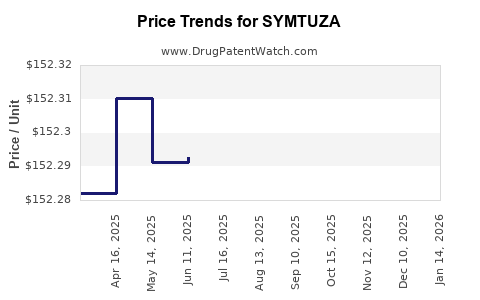
This drug has four hundred and twenty-five patent family members in forty-seven countries. There has been litigation on patents covering SYMTUZA
See drug price trends for SYMTUZA.
The generic ingredient in SYMTUZA is cobicistat; darunavir; emtricitabine; tenofovir alafenamide fumarate. There are five drug master file entries for this API. One supplier is listed for this generic product. Additional details are available on the cobicistat; darunavir; emtricitabine; tenofovir alafenamide fumarate profile page.
When can VIBATIV (telavancin hydrochloride) generic drug versions launch in the United States?
Generic name: telavancin hydrochloride
DrugPatentWatch® Estimated Key Patent Expiration / Generic Entry Date: January 01, 2027
Generic Entry Controlled by: United States Patent Patent 7,531,623
VIBATIV is a drug marketed by Cumberland. There is one patent protecting this drug.
This drug has thirty-three patent family members in eighteen countries.
See drug price trends for VIBATIV.
The generic ingredient in VIBATIV is telavancin hydrochloride. One supplier is listed for this generic product. Additional details are available on the telavancin hydrochloride profile page.
When can PIQRAY (alpelisib) generic drug versions launch in the United States?
Generic name: alpelisib
DrugPatentWatch® Estimated Key Patent Expiration / Generic Entry Date: January 18, 2027
Generic Entry Controlled by: United States FDA Regulatory Exclusivity
PIQRAY is a drug marketed by Novartis. There are two patents protecting this drug.
This drug has sixty patent family members in fifty countries.
See drug price trends for PIQRAY.
The generic ingredient in PIQRAY is alpelisib. One supplier is listed for this generic product. Additional details are available on the alpelisib profile page.
When can STIOLTO RESPIMAT (olodaterol hydrochloride; tiotropium bromide) generic drug versions launch in the United States?
Generic name: olodaterol hydrochloride; tiotropium bromide
DrugPatentWatch® Estimated Key Patent Expiration / Generic Entry Date: January 19, 2027
Generic Entry Controlled by: United States Patent Patent 7,727,984
STIOLTO RESPIMAT is a drug marketed by Boehringer Ingelheim. There are five patents protecting this drug.
This drug has one hundred and twenty-three patent family members in forty countries. There has been litigation on patents covering STIOLTO RESPIMAT
See drug price trends for STIOLTO RESPIMAT.
The generic ingredient in STIOLTO RESPIMAT is olodaterol hydrochloride; tiotropium bromide. One supplier is listed for this generic product. Additional details are available on the olodaterol hydrochloride; tiotropium bromide profile page.
When can STRIVERDI RESPIMAT (olodaterol hydrochloride) generic drug versions launch in the United States?
Generic name: olodaterol hydrochloride
DrugPatentWatch® Estimated Key Patent Expiration / Generic Entry Date: January 19, 2027
Generic Entry Controlled by: United States Patent Patent 7,727,984
STRIVERDI RESPIMAT is a drug marketed by Boehringer Ingelheim. There is one patent protecting this drug.
This drug has fifty-one patent family members in thirty-six countries. There has been litigation on patents covering STRIVERDI RESPIMAT
See drug price trends for STRIVERDI RESPIMAT.
The generic ingredient in STRIVERDI RESPIMAT is olodaterol hydrochloride. One supplier is listed for this generic product. Additional details are available on the olodaterol hydrochloride profile page.
When can KYNAMRO (mipomersen sodium) generic drug versions launch in the United States?
Generic name: mipomersen sodium
DrugPatentWatch® Estimated Key Patent Expiration / Generic Entry Date: January 29, 2027
Generic Entry Controlled by: United States Patent Patent 7,511,131
KYNAMRO is a drug marketed by Kastle Theraps Llc. There is one patent protecting this drug.
This drug has forty-five patent family members in eleven countries. There has been litigation on patents covering KYNAMRO
See drug price trends for KYNAMRO.
The generic ingredient in KYNAMRO is mipomersen sodium. Additional details are available on the mipomersen sodium profile page.
When can NEVANAC (nepafenac) generic drug versions launch in the United States?
Generic name: nepafenac
DrugPatentWatch® Estimated Key Patent Expiration / Generic Entry Date: January 31, 2027
Generic Entry Controlled by: United States Patent Patent 7,834,059
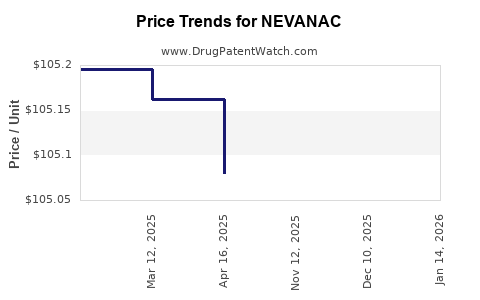
This drug has twenty-seven patent family members in twenty-three countries.
See drug price trends for NEVANAC.
The generic ingredient in NEVANAC is nepafenac. There are eight drug master file entries for this API. One supplier is listed for this generic product. Additional details are available on the nepafenac profile page.
When can RAPIVAB (peramivir) generic drug versions launch in the United States?
Generic name: peramivir
DrugPatentWatch® Estimated Key Patent Expiration / Generic Entry Date: February 12, 2027
Generic Entry Controlled by: United States Patent Patent 10,391,075
RAPIVAB is a drug marketed by Biocryst. There are two patents protecting this drug.
This drug has forty-three patent family members in fourteen countries.
See drug price trends for RAPIVAB.
The generic ingredient in RAPIVAB is peramivir. There is one drug master file entry for this API. Additional details are available on the peramivir profile page.
When can LEGUBETI (acetylcysteine lysine) generic drug versions launch in the United States?
Generic name: acetylcysteine lysine
DrugPatentWatch® Estimated Key Patent Expiration / Generic Entry Date: February 13, 2027
Generic Entry Controlled by: United States FDA Regulatory Exclusivity
LEGUBETI is a drug marketed by Galephar.
This drug has forty-three patent family members in fourteen countries.
The generic ingredient in LEGUBETI is acetylcysteine lysine. There are three drug master file entries for this API. Additional details are available on the acetylcysteine lysine profile page.
When can ALTABAX (retapamulin) generic drug versions launch in the United States?
Generic name: retapamulin
DrugPatentWatch® Estimated Key Patent Expiration / Generic Entry Date: February 14, 2027
Generic Entry Controlled by: United States Patent Patent 7,875,630
ALTABAX is a drug marketed by Almirall. There is one patent protecting this drug.
This drug has thirteen patent family members in six countries.
See drug price trends for ALTABAX.
The generic ingredient in ALTABAX is retapamulin. Additional details are available on the retapamulin profile page.
When can ADVIL ALLERGY SINUS (chlorpheniramine maleate; ibuprofen; pseudoephedrine hydrochloride) generic drug versions launch in the United States?
Generic name: chlorpheniramine maleate; ibuprofen; pseudoephedrine hydrochloride
DrugPatentWatch® Estimated Key Patent Expiration / Generic Entry Date: February 28, 2027
Generic Entry Controlled by: United States Patent Patent 7,863,287
ADVIL ALLERGY SINUS is a drug marketed by Haleon Us Holdings. There is one patent protecting this drug.
This drug has thirty-four patent family members in eighteen countries.
The generic ingredient in ADVIL ALLERGY SINUS is chlorpheniramine maleate; ibuprofen; pseudoephedrine hydrochloride. There are twenty-nine drug master file entries for this API. One supplier is listed for this generic product. Additional details are available on the chlorpheniramine maleate; ibuprofen; pseudoephedrine hydrochloride profile page.
When can DUAVEE (bazedoxifene acetate; estrogens, conjugated) generic drug versions launch in the United States?
Generic name: bazedoxifene acetate; estrogens, conjugated
DrugPatentWatch® Estimated Key Patent Expiration / Generic Entry Date: March 10, 2027
Generic Entry Controlled by: United States Patent Patent 7,683,051
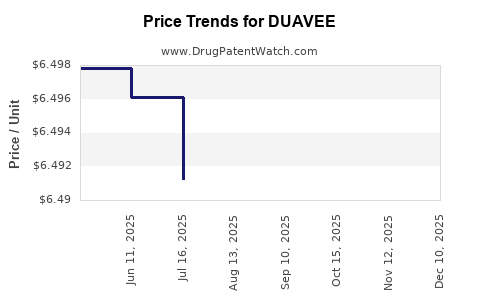
This drug has twenty-two patent family members in twenty countries.
See drug price trends for DUAVEE.
The generic ingredient in DUAVEE is bazedoxifene acetate; estrogens, conjugated. There are three drug master file entries for this API. Two suppliers are listed for this generic product. Additional details are available on the bazedoxifene acetate; estrogens, conjugated profile page.
When can LIVMARLI (maralixibat chloride) generic drug versions launch in the United States?
Generic name: maralixibat chloride
DrugPatentWatch® Estimated Key Patent Expiration / Generic Entry Date: March 13, 2027
Generic Entry Controlled by: United States FDA Regulatory Exclusivity
LIVMARLI is a drug marketed by Mirum. There are ten patents protecting this drug.
This drug has one hundred and forty-two patent family members in twenty-five countries. There has been litigation on patents covering LIVMARLI
See drug price trends for LIVMARLI.
The generic ingredient in LIVMARLI is maralixibat chloride. One supplier is listed for this generic product. Additional details are available on the maralixibat chloride profile page.
When can AVEED (testosterone undecanoate) generic drug versions launch in the United States?
Generic name: testosterone undecanoate
DrugPatentWatch® Estimated Key Patent Expiration / Generic Entry Date: March 14, 2027
Generic Entry Controlled by: United States Patent Patent 7,718,640
AVEED is a drug marketed by Endo Operations. There are two patents protecting this drug and one Paragraph IV challenge. One tentatively approved generic is ready to enter the market.
This drug has fifty-two patent family members in thirty-eight countries. There has been litigation on patents covering AVEED
See drug price trends for AVEED.
The generic ingredient in AVEED is testosterone undecanoate. There are sixty-nine drug master file entries for this API. Four suppliers are listed for this generic product. Additional details are available on the testosterone undecanoate profile page.
When can DYANAVEL XR 10 (amphetamine; amphetamine aspartate/dextroamphetamine sulfate) generic drug versions launch in the United States?
Generic name: amphetamine; amphetamine aspartate/dextroamphetamine sulfate
DrugPatentWatch® Estimated Key Patent Expiration / Generic Entry Date: March 15, 2027
Generic Entry Controlled by: United States Patent Patent 8,747,902
DYANAVEL XR 10 is a drug marketed by Tris Pharma Inc. There are five patents protecting this drug.
This drug has twenty-one patent family members in fourteen countries.
The generic ingredient in DYANAVEL XR 10 is amphetamine; amphetamine aspartate/dextroamphetamine sulfate. There are fifty-five drug master file entries for this API. One supplier is listed for this generic product. Additional details are available on the amphetamine; amphetamine aspartate/dextroamphetamine sulfate profile page.
When can VICTRELIS (boceprevir) generic drug versions launch in the United States?
Generic name: boceprevir
DrugPatentWatch® Estimated Key Patent Expiration / Generic Entry Date: March 17, 2027
Generic Entry Controlled by: United States Patent Patent 8,119,602
VICTRELIS is a drug marketed by Merck Sharp Dohme. There are two patents protecting this drug.
This drug has twenty-seven patent family members in seventeen countries.
The generic ingredient in VICTRELIS is boceprevir. Additional details are available on the boceprevir profile page.
When can VARUBI (rolapitant hydrochloride) generic drug versions launch in the United States?
Generic name: rolapitant hydrochloride
DrugPatentWatch® Estimated Key Patent Expiration / Generic Entry Date: April 04, 2027
Generic Entry Controlled by: United States Patent Patent 8,178,550
VARUBI is a drug marketed by Tersera. There are eight patents protecting this drug.
This drug has one hundred and fifty-eight patent family members in thirty-five countries.
The generic ingredient in VARUBI is rolapitant hydrochloride. One supplier is listed for this generic product. Additional details are available on the rolapitant hydrochloride profile page.
When can SAVAYSA (edoxaban tosylate) generic drug versions launch in the United States?
Generic name: edoxaban tosylate
DrugPatentWatch® Estimated Key Patent Expiration / Generic Entry Date: April 18, 2027
Generic Entry Controlled by: United States Patent Patent 7,365,205

This drug has one hundred and one patent family members in thirty-four countries. There has been litigation on patents covering SAVAYSA
See drug price trends for SAVAYSA.
The generic ingredient in SAVAYSA is edoxaban tosylate. There are four drug master file entries for this API. One supplier is listed for this generic product. Additional details are available on the edoxaban tosylate profile page.
When can CLINOLIPID 20% (olive oil; soybean oil) generic drug versions launch in the United States?
Generic name: olive oil; soybean oil
DrugPatentWatch® Estimated Key Patent Expiration / Generic Entry Date: April 24, 2027
Generic Entry Controlled by: United States FDA Regulatory Exclusivity
CLINOLIPID 20% is a drug marketed by Baxter Hlthcare Corp.
This drug has one hundred and one patent family members in thirty-four countries.
The generic ingredient in CLINOLIPID 20% is olive oil; soybean oil. There are three drug master file entries for this API. One supplier is listed for this generic product. Additional details are available on the olive oil; soybean oil profile page.
When can CHLORAPREP ONE-STEP (chlorhexidine gluconate; isopropyl alcohol) generic drug versions launch in the United States?
Generic name: chlorhexidine gluconate; isopropyl alcohol
DrugPatentWatch® Estimated Key Patent Expiration / Generic Entry Date: April 25, 2027
Generic Entry Controlled by: United States Patent Patent 7,422,388
CHLORAPREP ONE-STEP is a drug marketed by Becton Dickinson Co.
This drug has one hundred and one patent family members in thirty-four countries.
The generic ingredient in CHLORAPREP ONE-STEP is chlorhexidine gluconate; isopropyl alcohol. There are fifty-eight drug master file entries for this API. Five suppliers are listed for this generic product. Additional details are available on the chlorhexidine gluconate; isopropyl alcohol profile page.
When can GENVOYA (cobicistat; elvitegravir; emtricitabine; tenofovir alafenamide fumarate) generic drug versions launch in the United States?
Generic name: cobicistat; elvitegravir; emtricitabine; tenofovir alafenamide fumarate
DrugPatentWatch® Estimated Key Patent Expiration / Generic Entry Date: April 26, 2027
Generic Entry Controlled by: United States Patent Patent 8,981,103
GENVOYA is a drug marketed by Gilead Sciences Inc. There are nine patents protecting this drug.
This drug has four hundred and sixty-five patent family members in fifty-four countries. There has been litigation on patents covering GENVOYA
See drug price trends for GENVOYA.
The generic ingredient in GENVOYA is cobicistat; elvitegravir; emtricitabine; tenofovir alafenamide fumarate. There are five drug master file entries for this API. One supplier is listed for this generic product. Additional details are available on the cobicistat; elvitegravir; emtricitabine; tenofovir alafenamide fumarate profile page.
When can STRIBILD (cobicistat; elvitegravir; emtricitabine; tenofovir disoproxil fumarate) generic drug versions launch in the United States?
Generic name: cobicistat; elvitegravir; emtricitabine; tenofovir disoproxil fumarate
DrugPatentWatch® Estimated Key Patent Expiration / Generic Entry Date: April 26, 2027
Generic Entry Controlled by: United States Patent Patent 8,981,103
STRIBILD is a drug marketed by Gilead Sciences Inc. There are seven patents protecting this drug and one Paragraph IV challenge.
This drug has four hundred and seven patent family members in forty-nine countries. There has been litigation on patents covering STRIBILD
See drug price trends for STRIBILD.
The generic ingredient in STRIBILD is cobicistat; elvitegravir; emtricitabine; tenofovir disoproxil fumarate. There are five drug master file entries for this API. One supplier is listed for this generic product. Additional details are available on the cobicistat; elvitegravir; emtricitabine; tenofovir disoproxil fumarate profile page.
When can VITEKTA (elvitegravir) generic drug versions launch in the United States?
Generic name: elvitegravir
DrugPatentWatch® Estimated Key Patent Expiration / Generic Entry Date: April 26, 2027
Generic Entry Controlled by: United States Patent Patent 8,981,103
VITEKTA is a drug marketed by Gilead Sciences Inc. There are three patents protecting this drug. One tentatively approved generic is ready to enter the market.
This drug has ninety-two patent family members in thirty-six countries. There has been litigation on patents covering VITEKTA
The generic ingredient in VITEKTA is elvitegravir. There are six drug master file entries for this API. Additional details are available on the elvitegravir profile page.
When can AMYVID (florbetapir f-18) generic drug versions launch in the United States?
Generic name: florbetapir f-18
DrugPatentWatch® Estimated Key Patent Expiration / Generic Entry Date: April 30, 2027
Generic Entry Controlled by: United States Patent Patent 7,687,052
AMYVID is a drug marketed by Avid Radiopharms Inc. There are two patents protecting this drug.
This drug has fifty-one patent family members in thirty-three countries. There has been litigation on patents covering AMYVID
The generic ingredient in AMYVID is florbetapir f-18. One supplier is listed for this generic product. Additional details are available on the florbetapir f-18 profile page.
When can VELTASSA (patiromer sorbitex calcium) generic drug versions launch in the United States?
Generic name: patiromer sorbitex calcium
DrugPatentWatch® Estimated Key Patent Expiration / Generic Entry Date: May 29, 2027
Generic Entry Controlled by: United States Patent Patent 8,282,913

This drug has two hundred and seven patent family members in twenty-seven countries. There has been litigation on patents covering VELTASSA
See drug price trends for VELTASSA.
The generic ingredient in VELTASSA is patiromer sorbitex calcium. One supplier is listed for this generic product. Additional details are available on the patiromer sorbitex calcium profile page.
When can CONTRAVE (bupropion hydrochloride; naltrexone hydrochloride) generic drug versions launch in the United States?
Generic name: bupropion hydrochloride; naltrexone hydrochloride
DrugPatentWatch® Estimated Key Patent Expiration / Generic Entry Date: June 04, 2027
Generic Entry Controlled by: United States Patent Patent 9,107,837
CONTRAVE is a drug marketed by Nalpropion. There are eighteen patents protecting this drug and one Paragraph IV challenge.
This drug has two hundred and twenty-eight patent family members in forty-five countries. There has been litigation on patents covering CONTRAVE
See drug price trends for CONTRAVE.
The generic ingredient in CONTRAVE is bupropion hydrochloride; naltrexone hydrochloride. There are thirty-eight drug master file entries for this API. One supplier is listed for this generic product. Additional details are available on the bupropion hydrochloride; naltrexone hydrochloride profile page.
When can EMBEDA (morphine sulfate; naltrexone hydrochloride) generic drug versions launch in the United States?
Generic name: morphine sulfate; naltrexone hydrochloride
DrugPatentWatch® Estimated Key Patent Expiration / Generic Entry Date: June 19, 2027
Generic Entry Controlled by: United States Patent Patent 8,158,156
EMBEDA is a drug marketed by Alpharma Pharms. There are seven patents protecting this drug and four Paragraph IV challenges.
This drug has seventy-four patent family members in twenty-three countries.
See drug price trends for EMBEDA.
The generic ingredient in EMBEDA is morphine sulfate; naltrexone hydrochloride. There are twenty-three drug master file entries for this API. Additional details are available on the morphine sulfate; naltrexone hydrochloride profile page.
When can SIRTURO (bedaquiline fumarate) generic drug versions launch in the United States?
Generic name: bedaquiline fumarate
DrugPatentWatch® Estimated Key Patent Expiration / Generic Entry Date: June 21, 2027
Generic Entry Controlled by: United States FDA Regulatory Exclusivity
SIRTURO is a drug marketed by Janssen Therap. There are two patents protecting this drug.
This drug has ninety-seven patent family members in thirty-nine countries.
See drug price trends for SIRTURO.
The generic ingredient in SIRTURO is bedaquiline fumarate. There is one drug master file entry for this API. One supplier is listed for this generic product. Additional details are available on the bedaquiline fumarate profile page.
When can PREZCOBIX (cobicistat; darunavir) generic drug versions launch in the United States?
Generic name: cobicistat; darunavir
DrugPatentWatch® Estimated Key Patent Expiration / Generic Entry Date: June 26, 2027
Generic Entry Controlled by: United States Patent Patent 7,700,645

This drug has three hundred and fifty-six patent family members in forty-two countries. There has been litigation on patents covering PREZCOBIX
See drug price trends for PREZCOBIX.
The generic ingredient in PREZCOBIX is cobicistat; darunavir. There are five drug master file entries for this API. One supplier is listed for this generic product. Additional details are available on the cobicistat; darunavir profile page.
When can PARAGARD T 380A (copper) generic drug versions launch in the United States?
Generic name: copper
DrugPatentWatch® Estimated Key Patent Expiration / Generic Entry Date: June 28, 2027
Generic Entry Controlled by: United States FDA Regulatory Exclusivity
PARAGARD T 380A is a drug marketed by Coopersurgical.
This drug has three hundred and fifty-six patent family members in forty-two countries.
The generic ingredient in PARAGARD T 380A is copper. There are fifteen drug master file entries for this API. Two suppliers are listed for this generic product. Additional details are available on the copper profile page.
When can DOJOLVI (triheptanoin) generic drug versions launch in the United States?
Generic name: triheptanoin
DrugPatentWatch® Estimated Key Patent Expiration / Generic Entry Date: June 30, 2027
Generic Entry Controlled by: United States FDA Regulatory Exclusivity
DOJOLVI is a drug marketed by Ultragenyx Pharm Inc. There are two patents protecting this drug.
This drug has thirty-six patent family members in seventeen countries. There has been litigation on patents covering DOJOLVI
See drug price trends for DOJOLVI.
The generic ingredient in DOJOLVI is triheptanoin. There is one drug master file entry for this API. One supplier is listed for this generic product. Additional details are available on the triheptanoin profile page.
When can PICATO (ingenol mebutate) generic drug versions launch in the United States?
Generic name: ingenol mebutate
DrugPatentWatch® Estimated Key Patent Expiration / Generic Entry Date: July 06, 2027
Generic Entry Controlled by: United States Patent Patent 8,278,292

This drug has thirty-five patent family members in twenty-one countries. There has been litigation on patents covering PICATO
See drug price trends for PICATO.
The generic ingredient in PICATO is ingenol mebutate. There are three drug master file entries for this API. Additional details are available on the ingenol mebutate profile page.
When can BYFAVO (remimazolam besylate) generic drug versions launch in the United States?
Generic name: remimazolam besylate
DrugPatentWatch® Estimated Key Patent Expiration / Generic Entry Date: July 10, 2027
Generic Entry Controlled by: United States Patent Patent 9,777,007
BYFAVO is a drug marketed by Acacia. There are eleven patents protecting this drug.
This drug has fifty-three patent family members in twenty-four countries. There has been litigation on patents covering BYFAVO
See drug price trends for BYFAVO.
The generic ingredient in BYFAVO is remimazolam besylate. One supplier is listed for this generic product. Additional details are available on the remimazolam besylate profile page.
When can EPIDIOLEX (cannabidiol) generic drug versions launch in the United States?
Generic name: cannabidiol
DrugPatentWatch® Estimated Key Patent Expiration / Generic Entry Date: July 31, 2027
Generic Entry Controlled by: United States FDA Regulatory Exclusivity
EPIDIOLEX is a drug marketed by Jazz Pharms Res. There are thirty-two patents protecting this drug.
This drug has one hundred and seventy-four patent family members in twenty-seven countries. There has been litigation on patents covering EPIDIOLEX
See drug price trends for EPIDIOLEX.
The generic ingredient in EPIDIOLEX is cannabidiol. There are nine drug master file entries for this API. One supplier is listed for this generic product. Additional details are available on the cannabidiol profile page.
When can RELISTOR (methylnaltrexone bromide) generic drug versions launch in the United States?
Generic name: methylnaltrexone bromide
DrugPatentWatch® Estimated Key Patent Expiration / Generic Entry Date: August 03, 2027
Generic Entry Controlled by: United States Patent Patent 12,303,592

This drug has one hundred and twenty-four patent family members in thirty-six countries. There has been litigation on patents covering RELISTOR
See drug price trends for RELISTOR.
The generic ingredient in RELISTOR is methylnaltrexone bromide. There are three drug master file entries for this API. One supplier is listed for this generic product. Additional details are available on the methylnaltrexone bromide profile page.
When can LAMPIT (nifurtimox) generic drug versions launch in the United States?
Generic name: nifurtimox
DrugPatentWatch® Estimated Key Patent Expiration / Generic Entry Date: August 06, 2027
Generic Entry Controlled by: United States FDA Regulatory Exclusivity
LAMPIT is a drug marketed by Bayer Healthcare.
This drug has one hundred and twenty-four patent family members in thirty-six countries.
See drug price trends for LAMPIT.
The generic ingredient in LAMPIT is nifurtimox. One supplier is listed for this generic product. Additional details are available on the nifurtimox profile page.
When can LYNPARZA (olaparib) generic drug versions launch in the United States?
Generic name: olaparib
DrugPatentWatch® Estimated Key Patent Expiration / Generic Entry Date: August 12, 2027
Generic Entry Controlled by: United States Patent Patent 8,143,241
LYNPARZA is a drug marketed by Astrazeneca. There are twelve patents protecting this drug. Three tentatively approved generics are ready to enter the market.
This drug has two hundred and fifty-four patent family members in fifty-two countries. There has been litigation on patents covering LYNPARZA
See drug price trends for LYNPARZA.
The generic ingredient in LYNPARZA is olaparib. There are three drug master file entries for this API. One supplier is listed for this generic product. Additional details are available on the olaparib profile page.
When can VISTOGARD (uridine triacetate) generic drug versions launch in the United States?
Generic name: uridine triacetate
DrugPatentWatch® Estimated Key Patent Expiration / Generic Entry Date: August 17, 2027
Generic Entry Controlled by: United States Patent Patent 7,776,838
VISTOGARD is a drug marketed by Btg Intl. There is one patent protecting this drug.
This drug has one hundred and seventy-five patent family members in twenty-one countries.
See drug price trends for VISTOGARD.
The generic ingredient in VISTOGARD is uridine triacetate. There are thirty-six drug master file entries for this API. One supplier is listed for this generic product. Additional details are available on the uridine triacetate profile page.
When can NOURIANZ (istradefylline) generic drug versions launch in the United States?
Generic name: istradefylline
DrugPatentWatch® Estimated Key Patent Expiration / Generic Entry Date: September 05, 2027
Generic Entry Controlled by: United States Patent Patent 8,318,201
NOURIANZ is a drug marketed by Kyowa Kirin. There are two patents protecting this drug.
This drug has forty-nine patent family members in seventeen countries. There has been litigation on patents covering NOURIANZ
See drug price trends for NOURIANZ.
The generic ingredient in NOURIANZ is istradefylline. There is one drug master file entry for this API. One supplier is listed for this generic product. Additional details are available on the istradefylline profile page.
When can SOLOSEC (secnidazole) generic drug versions launch in the United States?
Generic name: secnidazole
DrugPatentWatch® Estimated Key Patent Expiration / Generic Entry Date: September 15, 2027
Generic Entry Controlled by: United States FDA Regulatory Exclusivity
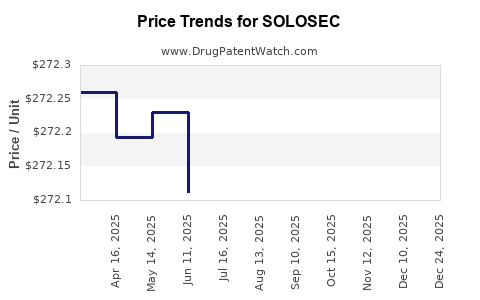
This drug has sixteen patent family members in five countries. There has been litigation on patents covering SOLOSEC
See drug price trends for SOLOSEC.
The generic ingredient in SOLOSEC is secnidazole. There are two drug master file entries for this API. One supplier is listed for this generic product. Additional details are available on the secnidazole profile page.
When can TYMLOS (abaloparatide) generic drug versions launch in the United States?
Generic name: abaloparatide
DrugPatentWatch® Estimated Key Patent Expiration / Generic Entry Date: October 03, 2027
Generic Entry Controlled by: United States Patent Patent 8,748,382

This drug has fifty-six patent family members in twenty-nine countries. There has been litigation on patents covering TYMLOS
See drug price trends for TYMLOS.
The generic ingredient in TYMLOS is abaloparatide. One supplier is listed for this generic product. Additional details are available on the abaloparatide profile page.
More… ↓
DrugPatentWatch cited by CNN, NEJM, Nature Journals, and more …

Make Better Decisions: Try a trial or see plans & pricing
Drugs may be covered by multiple patents or regulatory protections. All trademarks and applicant names are the property of their respective owners or licensors. Although great care is taken in the proper and correct provision of this service, thinkBiotech LLC does not accept any responsibility for possible consequences of errors or omissions in the provided data. The data presented herein is for information purposes only. There is no warranty that the data contained herein is error free. We do not provide individual investment advice. This service is not registered with any financial regulatory agency. The information we publish is educational only and based on our opinions plus our models. By using DrugPatentWatch you acknowledge that we do not provide personalized recommendations or advice. thinkBiotech performs no independent verification of facts as provided by public sources nor are attempts made to provide legal or investing advice. Any reliance on data provided herein is done solely at the discretion of the user. Users of this service are advised to seek professional advice and independent confirmation before considering acting on any of the provided information. thinkBiotech LLC reserves the right to amend, extend or withdraw any part or all of the offered service without notice.
ISSN: 2162-2639

Privacy and Cookies
Terms & Conditions
Site Map
DrugPatentWatch Alternatives
LOE / Major Patent Expirations 2026 - 2027
NCE-1 Patent Challenge Dates 2026 - 2027
Friedman, Yali. "DrugPatentWatch" DrugPatentWatch, thinkBiotech, 2026, www.DrugPatentWatch.com.
See Primary Research Papers Citing DrugPatentWatch