Last updated: July 27, 2025
Introduction to Itraconazole
Itraconazole, a triazole antifungal agent developed by Janssen Pharmaceuticals, has been a cornerstone in the treatment of fungal infections such as onychomycosis, histoplasmosis, and aspergillosis. Approved by the U.S. Food and Drug Administration (FDA) in 1992, it remains prominent due to its broad-spectrum antifungal activity. Its pharmacokinetics, safety profile, and expanded indications have cemented its position in antifungal therapy. The dynamics of its market, including pricing and competitive landscape, are evolving amidst increasing demand for effective systemic antifungal agents.
Global Market Overview
The global itraconazole market was valued at approximately USD 772 million in 2021, with an anticipated compound annual growth rate (CAGR) of 4.8% through 2028. The expansion is attributable to the increasing prevalence of fungal infections, expanding indications, and the rising burden of immunocompromised patients worldwide[1].
Market Drivers
-
Growing Incidence of Fungal Infections: The global rise in fungal diseases, especially among immunosuppressed populations (HIV, transplant recipients, chemotherapy patients), sustains demand for antifungal agents.
-
Expanded Therapeutic Indications: FDA approvals for new formulations and indications, such as voriconazole and posaconazole, indirectly support itraconazole’s market via industry benchmarks and competitive dynamics.
-
Rising Awareness and Screening: Increased awareness campaigns and diagnostic capabilities facilitate early intervention, thus heightening antifungal drug utilization.
Market Restraints
-
Availability of Generic Formulations: Patent expirations have led to numerous generics, intensifying price competition and compressing margins.
-
Emergence of Resistance: Growing reports of azole-resistant fungal strains threaten long-term efficacy, pressing clinicians toward alternative therapies.
-
Adverse Events Profile: Hepatotoxicity and drug-drug interactions can limit use, especially in polypharmacy contexts.
Regional Market Dynamics
North America: Dominates due to high healthcare expenditure, advanced healthcare infrastructure, and high awareness levels. The U.S. accounts for over 60% of the global market share, boosted by strong generic penetration and clinical use.
Europe: The second-largest market, driven by expanding aging populations and similar infection patterns.
Asia-Pacific: Rapidly growing market owing to increasing fungal disease prevalence, improving healthcare access, and local manufacturing to reduce costs.
Latin America and Middle East/Africa: Show moderate growth, constrained by economic factors but benefiting from increased disease surveillance.
Competitive Landscape
Leading pharmaceutical companies in the itraconazole space include Janssen Pharmaceuticals, Sandoz (Novartis), Mylan (now part of Viatris), and Teva Pharmaceuticals. Generic versions account for a substantial proportion of market sales, resulting in competitive pricing pressures[2].
Emerging biopharmaceutical firms focus on novel azole derivatives aiming to overcome resistance and reduce adverse effects, potentially disrupting the traditional market balance.
Pricing Trends and Projections
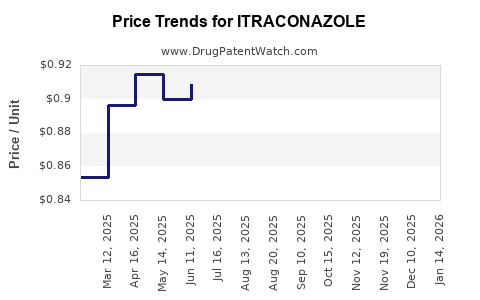
Historically, itraconazole’s pricing has declined significantly following patent expirations. In 2000, branded formulations averaged USD 12 per 100 mg capsule; in 2022, generic prices dropped substantially, with typical costs below USD 2 per capsule in many regions[3].
Current Price Landscape:
- Branded formulations: USD 8–USD 12 per 100 mg capsule.
- Generic formulations: USD 0.50–USD 2 per capsule, depending on the region and supplier.
Projected Price Trends:
- Short-term (2023–2025): Prices are expected to remain stable or decline slightly (2-3%), driven by intense generic competition and price erosion strategies.
- Mid-term (2026–2030): Prices could stabilize or slightly increase if new formulations (e.g., IV, extended-release) achieve niche market penetration and patent stabilization for specific formulations.
- Factors influencing projections:
- Market penetration of biosimilars or novel compounds later in the decade.
- Regulatory policies impacting drug pricing and reimbursement.
- Emerging resistance patterns potentially leading to increased use of alternative therapies, impacting demand and prices.
Future Market Opportunities and Challenges
The market presents opportunities for formulation innovations—such as liposomal versions—that optimize bioavailability and reduce toxicity. Additionally, expanding indications into prophylactic uses among immunocompromised patients could elevate demand.
Conversely, resistance development and safety concerns pose ongoing challenges, which may limit future market growth or necessitate higher costs for newer, safer formulations.
Implications for Stakeholders
Pharmaceutical Companies: Should monitor patent landscapes and invest in formulation innovations. Price competition among generics necessitates efficiency strategies and value-based marketing.
Healthcare Providers: Need to weigh cost-saving generic options against clinical considerations like bioavailability, safety, and resistance.
Policymakers: Should consider regulatory frameworks that balance affordability with incentives for innovation, especially as resistant fungal strains emerge.
Key Takeaways
- The global itraconazole market is poised for steady growth at a CAGR of approximately 4.8%, mainly driven by increasing fungal infection prevalence.
- Patent expirations have shifted the market towards generics, leading to significant price reductions and enhanced accessibility.
- Current prices are highly competitive, but future price dynamics depend on formulation innovations, resistance trends, and regional policies.
- Resistance development and safety profiles need ongoing monitoring to sustain market growth and inform clinical use.
- Market entrants should focus on developing improved formulations and expanding indications to capitalize on unmet needs.
FAQs
1. How has patent expiration impacted itraconazole pricing?
Patent expiration has caused a sharp decline in prices, fostering a competitive environment that benefits consumers and health systems through reduced costs.
2. Are there emerging competitors threatening itraconazole's market share?
Yes. Newer azole antifungals like voriconazole and posaconazole have expanded options, especially for invasive infections, potentially reducing reliance on itraconazole in certain indications.
3. What factors could cause future price increases for itraconazole?
Introduction of novel formulations, patent protections for specific versions, or shortages could temporarily increase prices. Resistance-driven demand shifts toward newer drugs might also influence market prices.
4. How does resistance impact the future of itraconazole use?
Rising azole-resistant fungal strains may lead to decreased efficacy, prompting clinicians to switch to alternative agents, potentially diminishing demand and influencing pricing strategies.
5. What regions offer the best growth opportunities for itraconazole?
Asia-Pacific and Latin America exhibit growing markets due to rising infection rates and increased healthcare investments, making them strategic focus areas for expansion.
References
[1] MarketsandMarkets. “Antifungal Drugs Market by Product Type, Route of Administration, and Region.” 2022.
[2] IQVIA. “Pharmaceutical Market Trends and Competitive Landscape.” 2022.
[3] Medicine prices online and regional pharmacy data, 2022.