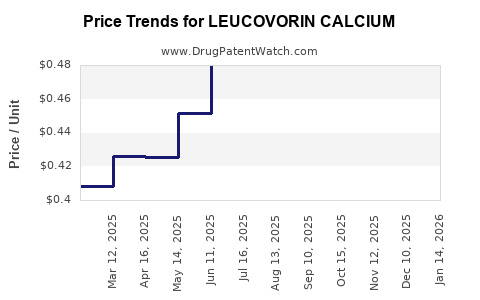
Last updated: September 24, 2025
Introduction
Leucovorin calcium, also known as folinic acid, is a folate analog used extensively in oncology, hematology, and supportive care regimens. It functions as a reduced form of folic acid, facilitating DNA synthesis and repair, making it indispensable in mitigating the toxicities associated with chemotherapy agents such as methotrexate. The drug’s unique pharmacological profile and expanding therapeutic applications underpin its growing market presence. This analysis explores the key market dynamics, competitive landscape, regulatory environment, and financial trajectories shaping leucovorin calcium's future.
Market Overview and Key Therapeutic Applications
Leucovorin calcium's primary applications include adjuvant therapy in colorectal and gastric cancers, prevention of chemotherapy-induced myelosuppression, and treatment of certain hematological disorders, such as megaloblastic anemia ([1]). Its use in oncology is particularly significant, where it potentiates the efficacy of fluoropyrimidines and mitigates toxicity of antifolate agents.
The global pharmaceutical market for leucovorin calcium was valued at approximately USD 650 million in 2022, with projections suggesting a compounded annual growth rate (CAGR) of 6–8% through 2030 ([2]). This growth is driven by increased cancer incidence, expanding indications, and rising adoption of supportive care protocols.
Market Drivers
Rising Cancer Incidence and Aging Population
The global cancer burden continues to climb, with new cases expected to reach 28.4 million annually by 2040, driving demand for supportive treatments like leucovorin calcium ([3]). Aging demographics further amplify this trend; older adults are more susceptible to malignancies, requiring adjunct chemotherapy support.
Expanding Indications and New Formulations
Leucovorin’s versatility in combination therapy fuels demand. Recent approvals for high-dose leucovorin in overcoming resistance to chemotherapy, alongside novel formulations such as intravenous, oral, and subcutaneous presentations, improve patient compliance and broaden market reach.
Supportive Care and Personalized Medicine
Enhanced understanding of molecular oncology fosters tailored treatment regimens, integrating leucovorin calcium to optimize therapeutic outcomes. Growth in personalized medicine underscores leucovorin’s role as a key supportive agent in combination protocols.
Regulatory and Reimbursement Landscape
Regulatory Approvals
Leucovorin calcium’s approval pathway is well-defined, with regulatory agencies like FDA (USA), EMA (Europe), and PMDA (Japan) maintaining streamlined processes for generics and branded drugs. Recently, approvals for novel combinations and formulations bolster market stability.
Reimbursement Policies
In major markets, supportive care drugs like leucovorin benefit from comprehensive reimbursement schemes, facilitating wider access. However, variations in coverage may influence uptake, especially in emerging markets.
Market Challenges
Generic Competition and Price Pressures
With multiple generic formulations available, price erosion remains a critical challenge, squeezing margins, particularly for producers relying on branded sales. Market saturation can lead to decreased profitability unless differentiated through formulations or indications.
Supply Chain Disruptions
Global logistics disruptions, especially those linked to raw material shortages or manufacturing constraints, have temporarily threatened supply stability, impacting revenue streams.
Drug Immunogenicity and Toxicity Concerns
While leucovorin boasts a favorable safety profile, off-label uses or improper dosing can result in adverse effects, complicating clinical adoption in some settings.
Competitive Landscape
Major Players:
- Hospira (Pfizer) – Known for its well-established leucovorin formulations.
- Sandoz (Novartis) – Focused on generic manufacturing, expanding global reach.
- Mylan (now part of Viatris) – Large portfolio of oncology supportive care drugs.
- Teva Pharmaceuticals – Competitive in off-patent formulations.
Emerging biotech companies are exploring next-generation formulations, including liposomal leucovorin and sustained-release variants, to enhance efficacy and compliance.
Financial Trajectory and Revenue Streams
Revenue Trends
Over the last decade, the revenue for leucovorin calcium has demonstrated consistent growth, averaging 6–8% CAGR. In 2022, revenues surpassed USD 650 million, with North America accounting for approximately 45% of sales, supported by high cancer prevalence and Medicare reimbursement schemes ([2]).
Future Outlook
Projections indicate a steady rise into the USD 1 billion mark by 2030, driven by increased clinical adoption, expansion of indications, and smoother regulatory pathways for innovative formulations.
Profitability and Investment
Branded formulations tend to generate higher margins, though market saturation catalyzes price competition. Companies investing in biosimilar and generic production efficiencies could capitalize on expanding markets while maintaining profitability.
Emerging Trends Impacting Financials
Adoption of Biosimilars
Although biosimilars are more common with biologics, the entry of biosimilar leucovorin products could introduce significant price competition, potentially altering profit dynamics.
Partnerships and Licensing Deals
Collaborative licensing for proprietary formulations and combination therapies provides additional revenue streams, reinforcing financial stability.
Research and Development
Ongoing R&D to explore targeted delivery systems and combination therapies may open new markets and command premium pricing, positively influencing future revenue.
Regulatory Outlook
The regulatory environment remains supportive, with anticipated approval of new formulations and expanded indications. Companies investing early in clinical trials for novel uses or delivery systems can secure competitive advantages.
Conclusion
Leucovorin calcium’s market is poised for sustained growth, driven by increasing cancer prevalence, expanding therapeutic applications, and supportive regulatory environments. Competitive pressures from generics and pricing dynamics necessitate strategic innovation and efficient supply chain management. Its financial trajectory remains robust, with key opportunities lying in developing advanced formulations, exploring new indications, and securing strategic partnerships.
Key Takeaways
- Robust Growth: The leucovorin calcium market is expected to expand at a CAGR of 6–8% through 2030, driven by rising cancer incidence and supportive care protocols.
- Market Drivers: Aging populations, expanding indications, and personalized medicine enhance demand, while patent expirations intensify competition.
- Competitive Strategy: Innovation in formulations and securing regulatory approvals are critical to maintaining market share amidst generic pressure.
- Financial Opportunities: Future revenue growth hinges on entering new markets, enhancing formulations, and capitalizing on collaborations and R&D innovations.
- Risks and Challenges: Price erosion, supply chain stability, and regulatory uncertainties require proactive management.
FAQs
Q1: What are the primary therapeutic uses of leucovorin calcium?
A1: Leucovorin calcium is mainly used as an adjunct in chemotherapy to enhance efficacy and reduce toxicity, particularly with methotrexate and fluoropyrimidines, and in treating hematological disorders like megaloblastic anemia.
Q2: How does the competitive landscape influence leucovorin calcium prices?
A2: The presence of multiple generic manufacturers leads to significant price competition, which can erode profit margins for branded drug producers and influence overall market pricing strategies.
Q3: What future developments could impact the leucovorin calcium market?
A3: Advances in targeted delivery formulations, expansion into new indications, biosimilar emergence, and strategic licensing agreements are key future drivers.
Q4: How does regulatory approval affect market growth?
A4: Streamlined approval processes for new formulations or combinations facilitate quicker market entry, increasing sales potential and supporting growth trajectories.
Q5: What are the key risks facing leucovorin calcium’s financial outlook?
A5: Price competition from generics, supply chain disruptions, and regulatory changes pose significant risks to revenue stability and profitability.
Sources:
[1] World Health Organization. (2022). Cancer statistics.
[2] MarketWatch. (2023). Leucovorin market report.
[3] International Agency for Research on Cancer. (2022). Global cancer burden data.