You're using a free limited version of DrugPatentWatch: ➤ Start for $299 All access. No Commitment.

Last Updated: December 15, 2025

HYDROCHLOROTHIAZIDE - Generic Drug Details


✉ Email this page to a colleague

« Back to Dashboard


What are the generic drug sources for hydrochlorothiazide and what is the scope of patent protection?

Hydrochlorothiazide is the generic ingredient in sixty-three branded drugs marketed by Alembic Pharms Ltd, Apotex, Aurobindo Pharma, Chartwell Molecular, Hikma Intl Pharms, Ipca Labs Ltd, Ivax Sub Teva Pharms, Jubilant Cadista, Prinston Inc, Quagen, Sciegen Pharms Inc, Sun Pharm Inds Inc, Unichem, Teva Branded Pharm, Novitium Pharma, Morton Grove, Roxane, Novartis, Halsey, Abc Holding, Accord Hlthcare, Actavis Elizabeth, Alra, Ascot, Aurolife Pharma Llc, Barr, Chartwell Rx, Dava Pharms Inc, Elkins Sinn, Heather, Heritage, Impax Labs, Inwood Labs, Lannett Co Inc, Leading, Mast Mm, Mylan, Oxford Pharms, Pharmobedient, Pvt Form, Solvay, Sun Pharm Industries, Superpharm, Teva, Usl Pharma, Vangard, Warner Chilcott, Watson Labs, Watson Labs Teva, West Ward, Whiteworth Town Plsn, Merck, Abbvie, Sanofi Aventis Us, Alembic, Apotex Inc, Atlas Pharms Llc, Aurobindo Pharma Ltd, Dr Reddys Labs Ltd, Hikma, Hisun Pharm Hangzhou, Lupin Ltd, Macleods Pharms Ltd, Sandoz, Watson Labs Inc, Schering, Glaxosmithkline, Aurobindo, Corepharma, Epic Pharma Llc, Invagen Pharms, Lupin, Sun Pharm Inds Ltd, Almatica, Organon, Granules, Teva Pharms, Torrent Pharms, Zydus Pharms Usa Inc, Parke Davis, Purepac Pharm, Rising, Strides Pharma Intl, Concordia, Validus Pharms, Senores Pharms, Sun Pharm Inds, Glenmark Pharms, Ucb Inc, Cosette, Alkem Labs Ltd, Hangzhou Binjiang, Hetero Labs Ltd V, MSN, Natco Pharma Usa, Teva Pharms Usa, Torrent, Umedica, Zydus Pharms, Wyeth Ayerst, Wyeth Pharms Inc, Duramed Pharms Barr, Ani Pharms, Pfizer Pharms, Pharmeral, Pfizer, Mutual Pharm, Ivax Pharms, Lederle, Upsher Smith, Boehringer Ingelheim, Glenmark Pharms Ltd, Mankind Pharma, Natco, Glaxosmithkline Llc, Cadila, Vitarine, Aurobindo Pharma Usa, Am Therap, Pliva, Quantum Pharmics, Rubicon Research, Amneal Pharms, Mylan Pharms Inc, and Zydus Lifesciences, and is included in three hundred and forty NDAs. There is one patent protecting this compound. Additional information is available in the individual branded drug profile pages.

There are thirty-two drug master file entries for hydrochlorothiazide. Forty-four suppliers are listed for this compound. There are seven tentative approvals for this compound.

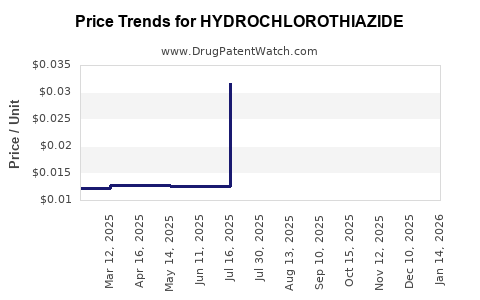
Drug Prices for HYDROCHLOROTHIAZIDE

See drug prices for HYDROCHLOROTHIAZIDE

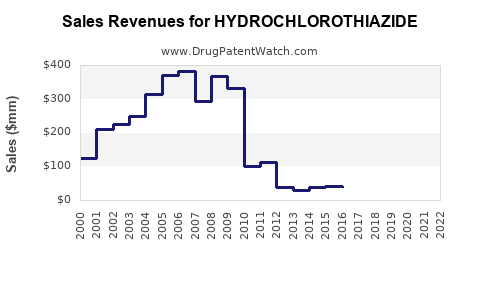
Drug Sales Revenue Trends for HYDROCHLOROTHIAZIDE

See drug sales revenues for HYDROCHLOROTHIAZIDE

Recent Clinical Trials for HYDROCHLOROTHIAZIDE

Identify potential brand extensions & 505(b)(2) entrants

SponsorPhase
Eurofarma Laboratorios S.A.PHASE3
Shanghai Jiao Tong University School of MedicineNA
Vital StrategiesNA

See all HYDROCHLOROTHIAZIDE clinical trials

Generic filers with tentative approvals for HYDROCHLOROTHIAZIDE
Applicant Application No. Strength Dosage Form
⤷  Get Started Free⤷  Get Started Free12.5MG;300MGTABLET;ORAL
⤷  Get Started Free⤷  Get Started Free12.5MG;150MGTABLET;ORAL
⤷  Get Started Free⤷  Get Started Free25MG;300MGTABLET; ORAL

The 'tentative' approval signifies that the product meets all FDA standards for marketing, and, but for the patents / regulatory protections, it would approved.

Pharmacology for HYDROCHLOROTHIAZIDE
Drug ClassThiazide Diuretic
Physiological EffectIncreased Diuresis
Medical Subject Heading (MeSH) Categories for HYDROCHLOROTHIAZIDE
Anatomical Therapeutic Chemical (ATC) Classes for HYDROCHLOROTHIAZIDE

US Patents and Regulatory Information for HYDROCHLOROTHIAZIDE

Applicant Tradename Generic Name Dosage NDA Approval Date TE Type RLD RS Patent No. Patent Expiration Product Substance Delist Req. Exclusivity Expiration
Watson Labs Teva VALSARTAN AND HYDROCHLOROTHIAZIDE hydrochlorothiazide; valsartan TABLET;ORAL 091519-004 Mar 21, 2013 DISCN No No ⤷  Get Started Free ⤷  Get Started Free ⤷  Get Started Free
Merck ALDORIL 15 hydrochlorothiazide; methyldopa TABLET;ORAL 013402-001 Approved Prior to Jan 1, 1982 DISCN No No ⤷  Get Started Free ⤷  Get Started Free ⤷  Get Started Free
Sandoz RESERPINE AND HYDROCHLOROTHIAZIDE hydrochlorothiazide; reserpine TABLET;ORAL 088200-001 Jan 31, 1984 DISCN No No ⤷  Get Started Free ⤷  Get Started Free ⤷  Get Started Free
Ipca Labs Ltd HYDROCHLOROTHIAZIDE hydrochlorothiazide TABLET;ORAL 040807-002 Jul 20, 2007 DISCN No No ⤷  Get Started Free ⤷  Get Started Free ⤷  Get Started Free
Inwood Labs HYDROCHLOROTHIAZIDE hydrochlorothiazide TABLET;ORAL 085067-001 Approved Prior to Jan 1, 1982 DISCN No No ⤷  Get Started Free ⤷  Get Started Free ⤷  Get Started Free
>Applicant >Tradename >Generic Name >Dosage >NDA >Approval Date >TE >Type >RLD >RS >Patent No. >Patent Expiration >Product >Substance >Delist Req. >Exclusivity Expiration

Market Dynamics and Financial Trajectory for Hydrochlorothiazide

Last updated: July 27, 2025

Introduction

Hydrochlorothiazide (HCTZ) remains a cornerstone in antihypertensive therapy and management of edema. As a thiazide diuretic, its efficacy, affordability, and longstanding clinical use underpin its enduring presence in the pharmaceutical landscape. This analysis explores the current market dynamics, regulatory environment, competitive landscape, and financial trajectory shaping hydrochlorothiazide’s future.

Market Overview

Hydrochlorothiazide, first introduced in the 1950s, continues to be a widely prescribed diuretic globally. The drug's primary indications—hypertension and edema—are prevalent health issues, underpinning consistent demand. According to IQVIA data, hydrochlorothiazide remains among the top antihypertensive agents prescribed worldwide, with millions of prescriptions annually [1].

Despite its long history, the drug's market share faces challenges, notably rising competition from combination therapies, generic saturation, and a shifting focus towards novel agents with improved safety profiles.

Market Dynamics

1. Regulatory Environment & Patent Lifespan

Hydrochlorothiazide originally benefited from patent protections, but patents expired decades ago, shifting the market towards generic production. This expiration has resulted in price erosion and increased accessibility but has also intensified competition among manufacturers.

Regulatory agencies like the FDA and EMA have instituted guidelines on the quality, safety, and labeling of diuretics, impacting market consistency. Moreover, recent concerns over the association of hydrochlorothiazide with non-melanoma skin cancers have led to evolving prescribing patterns, especially in the U.S. [2].

2. Competitive Landscape

The landscape is dominated by generic manufacturers, with a handful of brand-name versions maintaining limited market share. The proliferation of fixed-dose combinations—like hydrochlorothiazide combined with lisinopril or losartan—has transformed the therapeutic approach, often replacing standalone drugs.

Emerging therapies such as mineralocorticoid receptor antagonists, SGLT2 inhibitors, and new antihypertensive agents challenge hydrochlorothiazide’s position, particularly when clinical guidelines emphasize individualized therapy.

3. Prescribing Trends

Clinical guidelines from the American College of Cardiology and the American Heart Association continue to recommend hydrochlorothiazide as a first-line agent for hypertension, often as part of combination therapy, maintaining its essential role [3]. However, mounting awareness of adverse effects, including electrolyte disturbances and potential cancer risks, influences prescribing behaviors.

The COVID-19 pandemic also disrupted supply chains and prescribing trends, leading to temporary shortages in some regions, but these have largely stabilized.

4. Supply Chain & Manufacturing Constraints

The global supply chain for raw ingredients and active pharmaceutical ingredients (APIs) for hydrochlorothiazide is vulnerable to geopolitical factors, environmental regulations, and manufacturing capacity constraints. These factors might lead to intermittent supply disruptions and influence pricing.

5. Price and Market Penetration

The generic nature of hydrochlorothiazide results in low per-unit prices, with wholesale acquisition costs fluctuating insignificantly over time. Market penetration remains high in developed economies, while in emerging markets, regulatory and economic barriers influence accessibility.

Financial Trajectory

1. Revenue and Market Size

The global antihypertensive drug market is valued at approximately USD 15 billion, with hydrochlorothiazide accounting for a significant share owing to its affordability and widespread use. Its revenue contribution has plateaued in high-income markets, but growth persists in emerging economies due to increasing hypertension awareness and healthcare investments.

2. Impact of Patent Expiry and Generics

Patent expiration in the 1990s precipitated a sharp decline in brand-name hydrochlorothiazide revenues, replaced by fierce generics competition. While revenues have stabilized, marginal declines are expected owing to pricing pressures and substitution by combination drugs.

3. Future Revenue Drivers

Continued utilization in hypertension management, especially in combination formulations, sustains revenue streams. Growth potential lies in expanding access in low- and middle-income countries, where regulatory barriers ease and healthcare infrastructure improves.

4. Cost of Production and Margins

Manufacturing costs for hydrochlorothiazide are relatively low due to inexpensive raw materials and straightforward synthesis. This cost advantage enhances gross margins for generic producers, although intense price competition compresses net margins.

5. Regulatory Risks and Opportunities

Regulatory concerns, such as cancer risk reassessments, pose risks to market stability. Conversely, regulatory acceptance of generics and biosimilars may facilitate market expansion and price competition, ultimately impacting revenue trajectories.

Strategic Considerations for Stakeholders

  • Pharmaceutical Companies: Diversify product portfolios towards combination therapies and novel antihypertensives to mitigate flat or declining revenues.
  • Manufacturers: Invest in supply chain resilience and cost efficiency to maintain margins amid intense pricing competition.
  • Investors: Monitor regulatory developments and market penetration trends, especially in emerging markets, for informed decisions.
  • Healthcare Providers: Stay updated on safety profiles and evolving guidelines to optimize prescribing practices.

Key Challenges and Opportunities

  • Challenges: Market saturation, safety concerns, regulatory scrutiny, supply chain vulnerabilities.
  • Opportunities: Market expansion in emerging regions, growth in fixed-dose combinations, and potential repositioning within broader hypertension treatment strategies.

Conclusion

Hydrochlorothiazide’s market remains resilient due to its longstanding clinical efficacy, low cost, and widespread use. However, the shale of patent protections, evolving safety profiles, and competitive pressures necessitate strategic adaptation by industry stakeholders. Its financial trajectory will largely depend on global health trends, regulatory landscape, and the pace of pharmacological innovation.

Key Takeaways

  • Hydrochlorothiazide continues to be a fundamental component of hypertension management globally, especially in combination therapies.
  • Generic proliferation has suppressed prices but sustains high-volume sales, particularly in markets with expanding healthcare access.
  • Regulatory concerns regarding skin cancer risk influence prescribing patterns and may impact market stability.
  • Supply chain robustness and manufacturing efficiencies are critical for maintaining margins in a highly competitive environment.
  • Future growth hinges on expanding use in emerging markets and integrating hydrochlorothiazide into newer combination formulations.

FAQs

1. What factors are most likely to influence hydrochlorothiazide’s market in the next five years?
Shifts in clinical guidelines, safety concerns, regulatory decisions, manufacturing capacity, and adoption of combination therapies will shape its market landscape.

2. How do safety concerns about skin cancer impact hydrochlorothiazide’s prescribing?
Regulatory agencies have issued warnings, prompting clinicians to assess risks versus benefits, potentially reducing standalone prescriptions and favoring alternative therapies.

3. Are there emerging alternatives to hydrochlorothiazide that threaten its market share?
Yes, newer diuretics and antihypertensive classes with improved safety profiles, such as SGLT2 inhibitors or mineralocorticoid receptor antagonists, are gaining traction.

4. How does global regulation affect hydrochlorothiazide’s manufacturing and sales?
Regulations concerning safety and quality standards influence manufacturing licenses, supply chains, and market approvals, particularly in regions with stringent regulatory regimes.

5. What are the prospects for hydrochlorothiazide in emerging markets?
The outlook remains positive due to increasing hypertension prevalence, healthcare infrastructure expansion, and cost-effective generics, presenting growth opportunities.


References:

[1] IQVIA. Top prescribed antihypertensives globally, 2022.
[2] U.S. Food and Drug Administration. Hydrochlorothiazide Skin Cancer Warning, 2019.
[3] American College of Cardiology. Hypertension Guidelines, 2017.

More… ↓

⤷  Get Started Free

Make Better Decisions: Try a trial or see plans & pricing

Drugs may be covered by multiple patents or regulatory protections. All trademarks and applicant names are the property of their respective owners or licensors. Although great care is taken in the proper and correct provision of this service, thinkBiotech LLC does not accept any responsibility for possible consequences of errors or omissions in the provided data. The data presented herein is for information purposes only. There is no warranty that the data contained herein is error free. We do not provide individual investment advice. This service is not registered with any financial regulatory agency. The information we publish is educational only and based on our opinions plus our models. By using DrugPatentWatch you acknowledge that we do not provide personalized recommendations or advice. thinkBiotech performs no independent verification of facts as provided by public sources nor are attempts made to provide legal or investing advice. Any reliance on data provided herein is done solely at the discretion of the user. Users of this service are advised to seek professional advice and independent confirmation before considering acting on any of the provided information. thinkBiotech LLC reserves the right to amend, extend or withdraw any part or all of the offered service without notice.